
Share this post

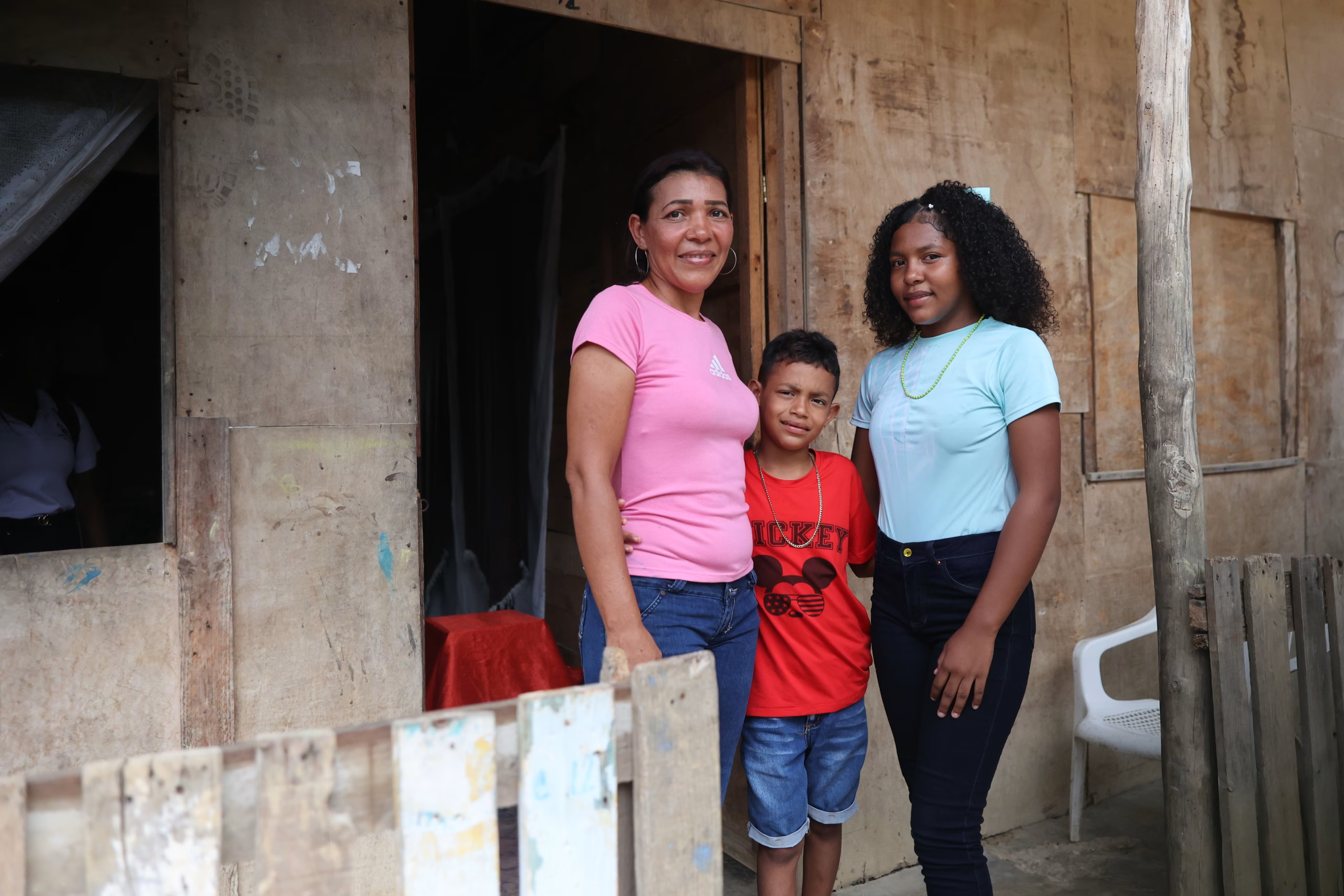
Milagro’s name means miracle—a fitting name for a woman whose story captures both the hardship and hope faced by millions of refugees around the world.
Eight years ago, Milagro fled Venezuela with her husband and two children, escaping violence and economic collapse in search of a better life in Colombia. But safety did not mean stability for her family.
Soon after arriving in Colombia, her husband was gone. With no job, support, or community, Milagro was left to carry the weight of her children’s future on her own.
Abandoned and alone in an unfamiliar city, she found herself scraping by, working not for money, but for food just to keep her daughter and son from going to bed hungry.
Her story, though heartbreaking, is far from unique. This World Refugee Week, we’re reminded that displacement doesn’t end at the border. For millions of refugee families, the real crisis begins after they arrive, when the systems meant to support recovery shut them out entirely.
The Hidden Barrier Refugees Face: Financial Inclusion
At Opportunity International Canada, we believe the most pressing and most overlooked barrier to rebuilding a life is financial exclusion. Without access to microfinance, a bank account, a safe place to save, or a way to generate income, families like Milagro’s remain stuck in survival mode. There is no rebuilding without economic agency.
That’s why we’re deepening our commitment to refugee women in Colombia through our Ultra Poverty Graduation (UPG) program, building on years of experience walking with those at the very edge of poverty.
Last year alone, with your support we walked alongside 250 women-led households, many of whom were displaced and rendered invisible by the very systems that should have supported them.
When our team conducted baseline surveys in Cartagena, the findings were sobering:
- 75% of participants were eating one meal a day or less.
- Fewer than 10% had any savings.
- 22% had school-aged children who weren’t in school.
- Only 8% felt confident about their future.
When Milagro joined the program, she didn’t just learn how to manage money. She learned how to believe in herself again.
Over the course of just three and a half months, she gained financial literacy, opened a savings account, and enrolled in a cosmetology training course to pursue her dream of opening a beauty business. With her initial monthly stipends, she began selling empanadas and stuffed potatoes to earn additional income. She’s not just earning—she’s planning, saving, and investing in her future.
More than income, the program has given her something money can’t buy: confidence.
“Being part of this program has allowed me to reinvent myself, to believe in my abilities, and to realize that I am not alone,” she told us. “Now I have a plan, I have savings, and I have the confidence to build a better future for my children.”
Her daughter sees that too. During our visit with her, she stood proudly in front of us and shared how much she admired her mother’s strength, how she saw her fighting every day to build a better life for her and her brother. With dreams of becoming a Structural Engineer, she knows the opportunities she now has in Colombia wouldn’t have been possible in Venezuela. “My mother made this possible”, she said.
What Financial Inclusion Looks Like for Refugee Families
That is the power of true financial inclusion.
Too often, financial inclusion is defined narrowly, as simply access to a bank account or mobile payment tool. But it’s far more than that. For displaced women like Milagro, it means:
- Stability through stipends that provide room to breathe
- Agency through training and coaching that put women in control
- Dignity through income generation and the ability to provide for their families
- Belonging through group savings and mentorship that rebuild social capital
- Possibility as children grow up in households where education is prioritized, basic needs are met, and long-term goals feel within reach
This work goes far beyond charity to building economic pathways where none existed. It is the missing piece in how the world responds to forced migration. Without financial inclusion, refugee recovery remains fragile. With it, we unlock potential, restore dignity, and help families move from instability to possibility.
Milagro’s story isn’t finished; it’s a work in progress, full of hope and daily resilience. The path in front of her is not an easy one. But now, it is forward.
This World Refugee Week let’s not only honour the courage of those who flee; let’s invest in the systems that help them rise.