


In a vulnerable neighbourhood just outside Santo Domingo in the Dominican Republic, a woman named Ana María Cabrera started a school with no money, no furniture, and no staff; just a sign and a conviction that the children in her community need quality education.
She didn’t begin with a business plan. She began with need.
Families in Cancino Adentro were searching for somewhere safe, nurturing, and affordable for their children to learn, and Ana María stepped in. That simple act of courage has since grown into a school that now serves 160 students and stands as a powerful example of what is possible when education and opportunity come together.
She rented a house. Someone loaned her the deposit. A neighbour helped her purchase used desks from a closing school. That first year, she enrolled 20 children. She had nothing but faith and the conviction that children in her community deserved better.
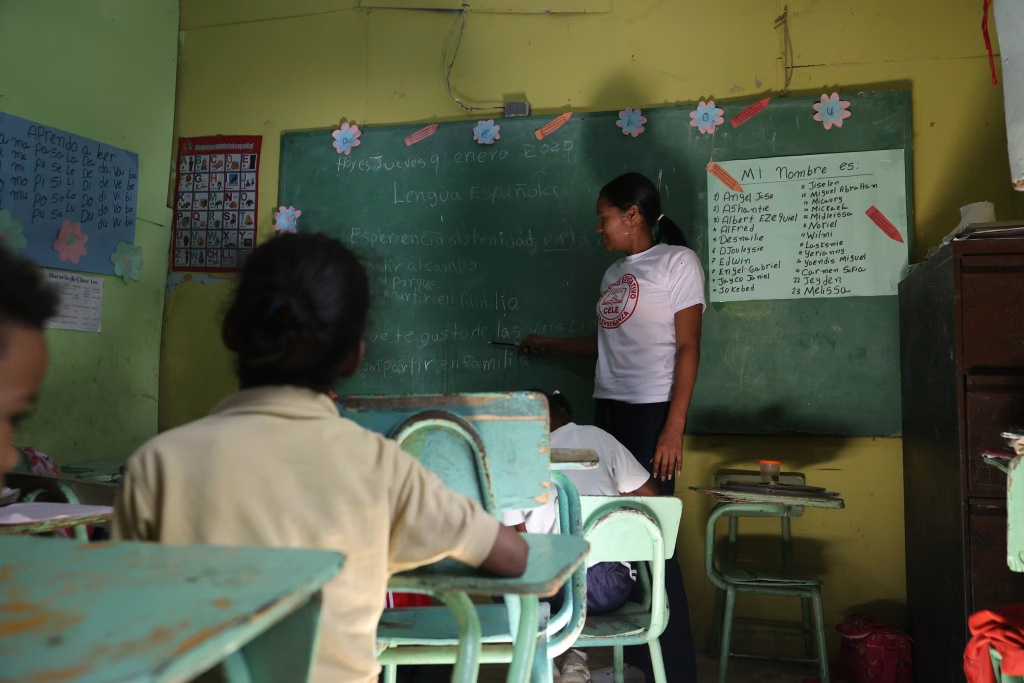
Today, her school serves 160 students from age two through Grade 5, supported by a team of 11 staff and educators. The school day runs from 7 a.m. to 5 p.m., designed to support working parents. Over time, she has introduced English classes, a visiting psychologist, an arts and choreography program, as well as values-based learning.
Her goal isn’t just to educate, it’s to restore dignity.
Schools as Enterprises, Not Just Classrooms
Ana María has never viewed her school as separate from the economic realities around it. She is clear-eyed: the school must cover rent, pay salaries, and manage day-to-day operations, just like any microenterprise.
That is exactly why Opportunity International exists at the intersection of education and microfinance. Through our EduFinance program, we provide schools with access to capital, School Improvement Loans, that allow them to expand, renovate, and improve infrastructure.
But access to capital alone is not enough.
Ana María and her team participate in EduQuality, a professional development and training program that helps school leaders build operational sustainability, strengthen teaching practices, and improve school governance. With the support of our implementing partner Aspire, she has received training in financial administration, marketing, and inclusive education.
She has developed a formal school improvement plan and accessed financing to cement the schoolyard, something as simple as smoothing the outdoor area now means fewer injuries and greater peace of mind for parents.
These improvements signal something larger: trust. They show families that this is a place where children matter.

Resilience Through Crisis
Like so many schools around the world, Ana María’s school was deeply impacted by the pandemic. Parents couldn’t pay tuition. Remote learning was only accessible to a few. At one point, she was teaching just 10 children over Zoom.
But she refused to close.
She kept the doors open. She held the space. And families slowly returned.
Today, the school is at capacity, and she is turning children away because there simply isn’t enough space.
Still, she dreams of more. Ana María rents the current building but hopes one day to build a permanent school that reflects the value of the children inside it. Her dream isn’t rooted in ambition; it’s rooted in dignity for children and families.
Investing in Education for Lasting Transformation
At Opportunity International Canada, we’ve spent decades helping families escape poverty through financial tools: loans, savings, training. But we’ve seen that when we invest in education, it strengthens everything we do.
It helps school leaders grow.
It helps mothers maintain employment.
It helps children imagine and achieve a life beyond limitation.
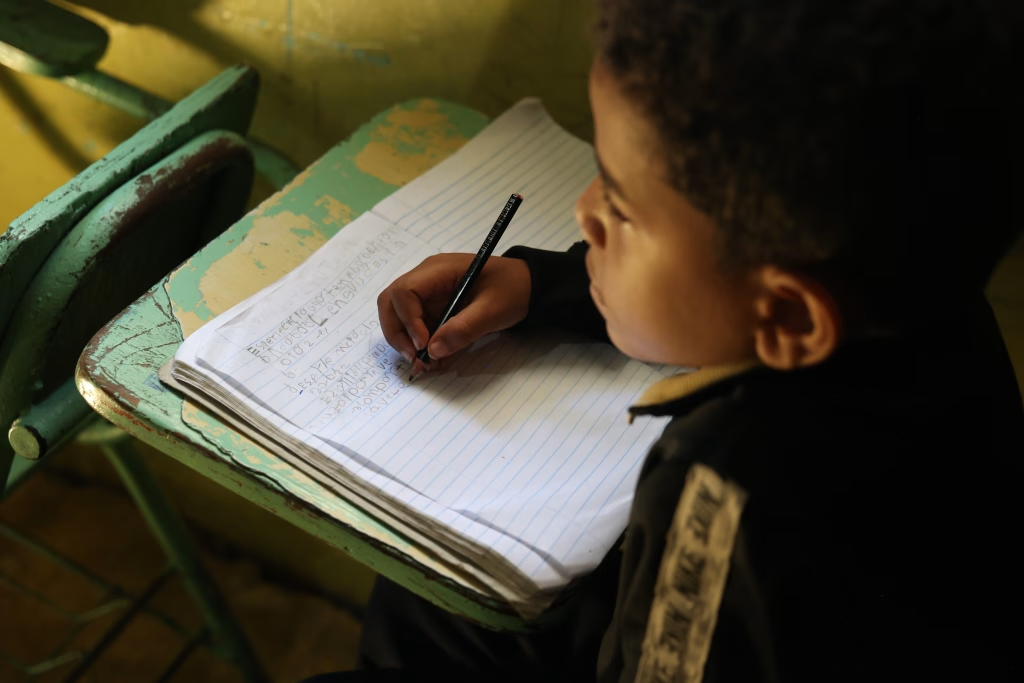
It turns potential into transformation and prepares the next generation of entrepreneurs and leaders.
And it does what Ana María has done for her community: it changes what people believe is possible.
When we asked her why she continues to do this work, Ana María said simply:
“I work for the children in my community because they deserve the best.”
I couldn’t agree more.